
- Discovery Assays

Human

Mouse
Rat
Porcine
Canine
Equine
Sheep
Bovine

Chicken
- Custom Plex Assays

Human
Mouse
Rat
Porcine
Canine
Equine

Sheep

Bovine
Chicken
- My Account
-





















Outsourcing Cytokine Testing vs In-House: Cost, Time, and Data Quality Compared
If your team is deciding whether to run cytokine assays internally or send samples to a specialized lab, treat it as an operations decision, not just a methods decision. The right choice depends on analyte count, sample volume, timeline, staff capacity, matrix complexity, and whether you already have a validated workflow in place.

Multiplex platforms can generate far more data from far less sample than running multiple ELISAs, but the workflow still lives or dies on sample handling, assay setup, QC, and consistency.
For most academic laboratories and early-stage biotechnology teams, outsourcing is often the preferred approach when study volume is low to moderate, the sample matrix is complex, internal staffing is limited, or the work is exploratory and time-sensitive.
In contrast, in-house testing is more appropriate when the necessary instrumentation is already in place, assays are routinely performed with established expertise in high-complexity workflows, and throughput volume is sufficient to support efficient, sustained operation.
| Factor | Outsourced specialized lab | In-house multiplex workflow | In-house ELISA workflow |
|---|---|---|---|
| Cost structure | Predictable per-sample or per-project spend; no instrument purchase | Instrument access/ownership/ maintenance, kits/consumables/ calibration | Lower equipment barrier, but cost scales with each analyte, each plate, and staff time |
| Equipment burden | None for the sponsor beyond sample prep and shipping | Reader, washer, software, verification, maintenance, calibration | Plate reader, washer, incubations, more hands-on plate handling |
| Scalability | Scales from pilot to large studies via parallel instrumentation and concurrent assay runs | Scales with available infrastructure and staffing; throughput may be limited by single-instrument workflows | Weak for multiplex biological questions |
| Staff requirement | Low internal labor after project setup | Competent operator needed for setup, pilot optimization, QC, troubleshooting | Highest hands-on burden when many analytes are required |
| Throughput | High if provider batches routinely | Good if workflow already established | Low for larger analyte panels |
| Turnaround | Usually predictable if provider runs the platform regularly | Depends on queue, staff, instrument availability, and reruns | Slows quickly as analyte count rises |
| Data quality risk | Built on validated methods and dedicated, highly trained staff to deliver reproducible, high-quality data | Dependent on internal validation, operator skill, and robustness of sample preparation and QC practices | Good for focused targets, but hard to scale consistently across many markers |
| Main risk | Choosing a weak provider or poorly specified scope | Hidden labor, failed pilot work, matrix issues, assay drift | Underestimating time and sample consumption |
The short version is simple. In-house testing gives you control, but it also gives you the full burden of execution. Outsourcing gives up some direct control while reducing operational drag and making cost, timing, and workflow risk easier to manage.
What running cytokine assays in-house actually requires
Running cytokine assays internally gives you full control over the process, but it also comes with a level of complexity that is often underestimated.
One of the most common mistakes is comparing outsourcing costs only to the price of a kit. In reality, in-house cytokine testing requires far more than reagents. Multiplex assays are, by definition, high-complexity workflows, requiring access to specialized platforms (e.g., Luminex), dedicated software, calibration and verification materials, and ongoing instrument maintenance. Beyond the equipment, the workflow itself must be carefully established, documented, and consistently executed by trained personnel to ensure reliable, reproducible data.
Even with the right infrastructure in place, the process relies heavily on experienced staff. Time is often spent on:
- Pilot testing and dilution optimization
- Troubleshooting unexpected or inconsistent results
- Repeat runs when data quality is not sufficient
Sample handling is another critical factor that directly affects results. Cytokine measurements are sensitive to pre-analytical variables such as delayed processing, freeze-thaw cycles, matrix effects and sample quality. Small inconsistencies can lead to significant differences in measured cytokine levels (1).
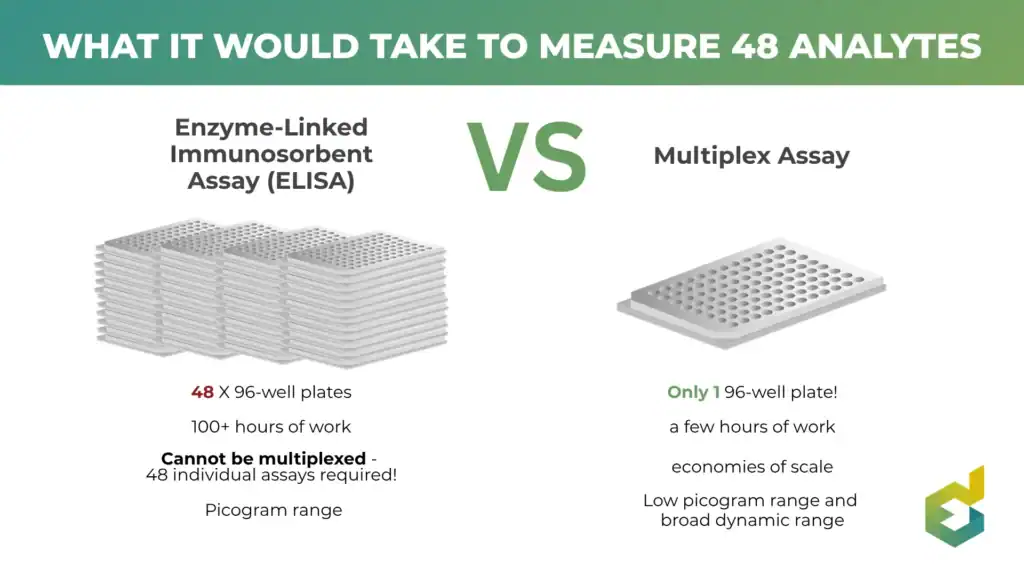
ELISA is sometimes used as a simpler alternative, especially when only one or two cytokines are being measured. In those cases, it can be practical and effective. However, as soon as the study requires a broader view of immune signaling, ELISA becomes difficult to scale. Each additional analyte means more wells, more controls, increased sample consumption, and more hands-on work. This increases both variability due to plate-to-plate differences or scheduling constraints due to availability (2).
What outsourcing changes
When you outsource cytokine testing, the project changes in two important ways. The cost structure becomes easier to predict, and the execution risk becomes easier to manage.
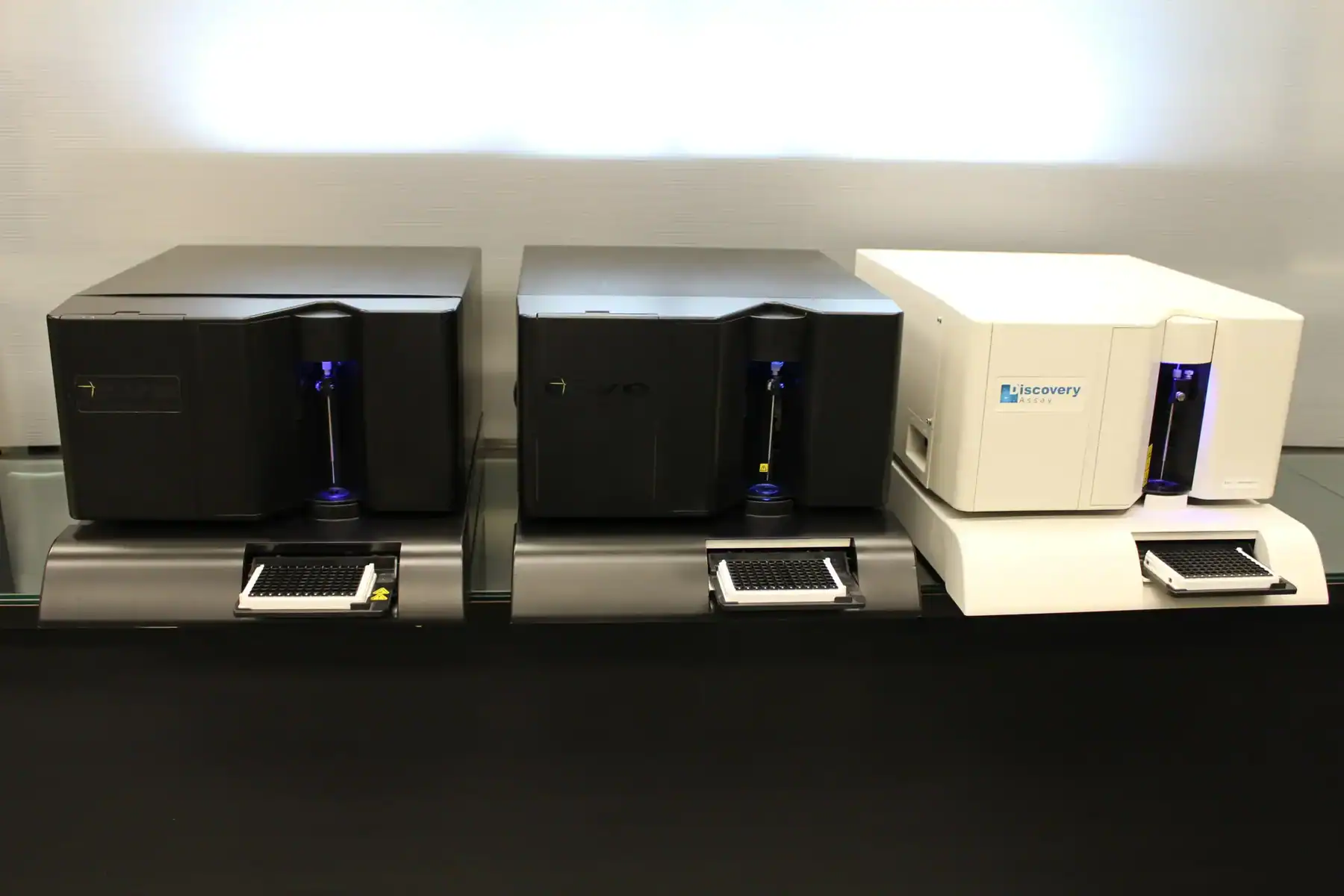
Instead of building and maintaining the assay workflow internally, you work with a lab that already runs these assays routinely. That means you are buying access to an established process rather than standing up the full platform yourself. Batching, calibration, repeatability checks, and routine execution are already part of the workflow.
For your team, that usually means:
- no instrument purchase or maintenance
- no staff training for assay execution
- no internal pilot optimization or troubleshooting burden
- less interruption to the scientists who should be focused on study design and interpretation
The process becomes straightforward. Samples are prepared and shipped to a qualified lab, processed within a controlled environment, and returned as structured, ready-to-analyze data.
For many research teams, this is the main advantage. It removes delays related to technical setup and allows studies to move forward without being slowed down by assay development or operational challenges.
At Eve Technologies, this model is built around flexibility and efficiency. For teams that need an affordable cytokine assay service, Eve offers a practical combination of breadth, flexibility, and lower operational overhead. Discovery Assays help when you want established multiplex panels without extra setup. Custom Plex supports studies that need a more specific analyte selection. Flexible pricing, including pay-per-well options where applicable, helps reduce waste and makes it much easier to avoid paying for unused capacity.
That matters because unused wells, internal labor, repeat runs, and instrument time are often what push in-house work over budget. When those hidden costs are part of the calculation, Eve Technologies is often cheaper than running the project internally.


Cost, Time, and Data Quality
Cost comparison
The most misleading way to compare options is to put a kit quote next to a service quote and stop there.
A true in-house cost model usually includes more than the assay kit itself. It includes reader access or depreciation, software, standards, controls, wash reagents, consumables, staff time, pilot work, failed runs, re-runs, project coordination, and the cost of keeping trained people occupied with routine execution. If you are running only part of a plate, you also end up paying for unused capacity in one form or another.
Time, throughput, and scalability
Most cytokine studies are not single-marker studies. They are network-level questions. Researchers want to understand inflammatory patterns, not just one isolated signal. That is why multiplex cytokine assay workflows are so valuable in the first place.
In-house workflows can be fast once they are fully mature. If the platform is already running smoothly, if matrix behavior is understood, and if the team performs the assays regularly, the internal route can be efficient.
Many labs are not in that position. They are still working through dilution strategy, troubleshooting matrix effects, juggling instrument schedules, or fitting assay work around other responsibilities. That is where timelines slip.
Outsourcing shortens the path between study planning and usable data. Your group scopes the panel, prepares and ships samples, and receives structured results back from a lab that already knows how to run the workflow. That is one reason many teams choose to outsource biomarker testing rather than build assay capability around a single project.
Data quality and reproducibility
Multiplex cytokine assays are well-established, high-quality analytical tools capable of delivering robust and reproducible data when properly implemented. Platforms such as Luminex have been extensively validated and are widely used across research and clinical settings, including CLIA-certified environments, reflecting a high level of confidence in their performance. Peer-reviewed studies have shown strong concordance with ELISA for the majority of cytokines, while offering clear advantages in throughput and sample efficiency.

At the same time, these are inherently high-complexity assays. Performance can be influenced by factors such as sample matrix, pre-analytical handling, and inter-site variability. Published studies have demonstrated that certain cytokines may vary across platforms or laboratories, and that matrix effects—particularly in serum versus plasma—can impact sensitivity and recovery. Delays in sample processing can further alter cytokine measurements (3).
This is where specialized laboratories add value: by combining validated workflows, controlled processes, and experienced personnel to manage these variables and ensure consistent, high-quality data.
In addition, leading laboratories provide guidance on pre-analytical and post-analytical considerations—such as sample collection, handling, normalization, and data interpretation—to support optimal assay performance and enable reliable downstream analysis.
When in-house makes sense
In-house testing makes sense when all of the following are true:
- You already have stable access to the required instrument and software.
- The staff already know the workflow and do not need basic training.
- The study volume is high enough to keep the process efficient.
- The assay scope is narrow, stable, and repeated often.
- Your matrix and dilution strategy are already understood.
If that describes your lab, keeping work internal can be rational and efficient. (4)
When outsourcing makes sense
Outsourcing is usually the smarter choice when the study is exploratory, the analyte set is broad, the sample matrix is difficult, the internal team is small, or the timeline is funding- or milestone-sensitive. It is especially attractive for pilot studies, translational projects, and grant-funded work where building internal workflow capability is less important than generating reliable data quickly.
It also becomes the better option when the full cost and effort of running assays in-house are taken into account. This includes not only reagents, but also staff time, instrument access, calibration, optimization, and repeat runs. In many cases, outsourcing converts these variable and often unpredictable costs into a more controlled and predictable project scope.
Outsourcing is particularly valuable when:
- internal resources are already stretched across other priorities
- there is limited experience with multiplex assay workflows
- delays from optimization or troubleshooting would impact study timelines
Why researchers choose Eve Technologies for cytokine testing
At Eve Technologies, the structure is different. For Discovery Assays, pricing is based on the number of wells actually used rather than the size of the plate, which removes one of the most common inefficiencies in cytokine studies.
In a typical in-house workflow, assays are tied to fixed plate formats. A panel is purchased as a full plate, and the cost is committed upfront regardless of how many wells are used. If a study includes 50 samples, the lab still ends up buying a full plate designed for a much larger capacity. The unused wells do not disappear from the cost, even though they are never used.
With Discovery Assays, the study is not constrained by the plate. If there are 50 samples, the cost reflects 50 wells. If the study is run in duplicate, the cost reflects 100 wells.
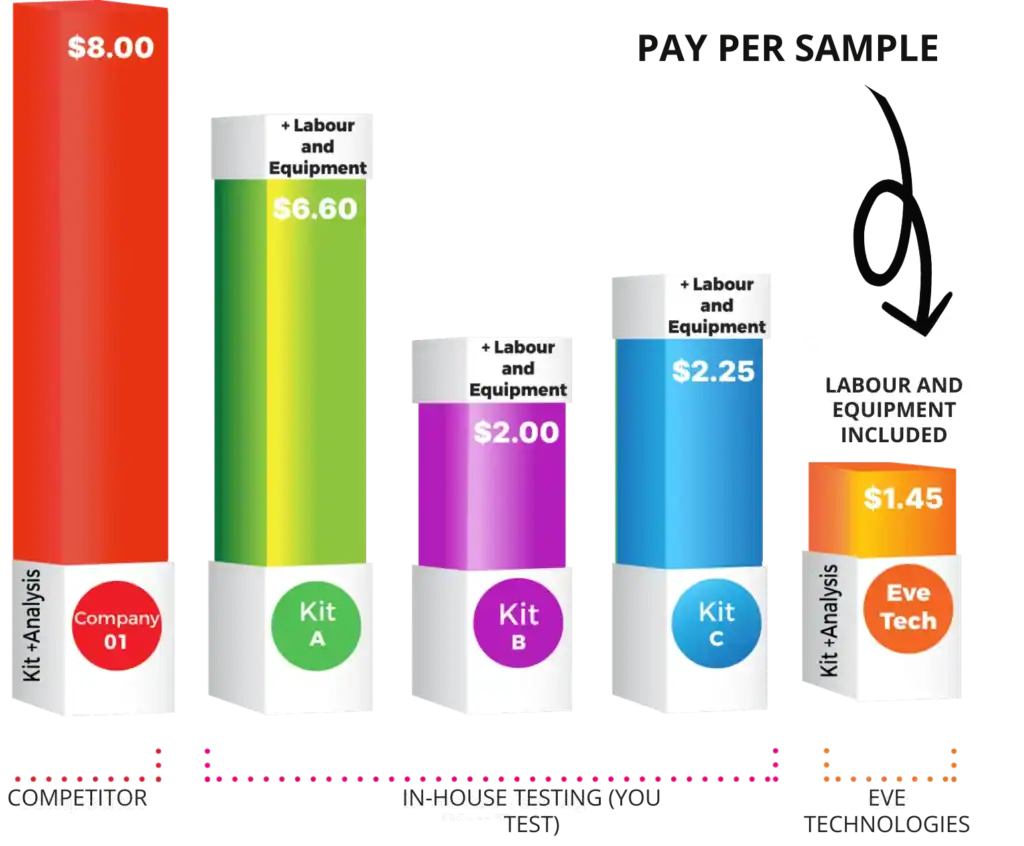
This comparison highlights the true cost of cytokine profiling on a per-analyte, per-sample basis across different approaches.
Eve Technologies consistently delivers a lower cost per data point due to its pay-per-well model and optimized multiplex workflows on the Luminex 200 platform. Unlike traditional service providers that require full plate commitments, researchers only pay for the samples they run.
In contrast, many external labs and in-house workflows carry higher effective costs due to unused wells, reagent waste, and added labor. As panel size increases, these inefficiencies compound, significantly increasing the cost per analyte.
A short decision checklist
Before choosing in-house or outsourced cytokine testing, ask:
- Do we have validated access to the required platform and established workflows?
- Are we measuring a few markers, or a biologically meaningful panel?
- Is our sample matrix straightforward, or likely to introduce variability or interference?
- Do we have the expertise and capacity to manage assay optimization, QC, reruns, and troubleshoot data issues (e.g., outliers, matrix effects, batch variation)?
- Is our study volume sufficient to support efficient in-house operation?
- Can our timeline accommodate method development and troubleshooting?
- Would predictable external costs be easier to manage than variable internal overhead?
For high-complexity multiplex assays, gaps in platform readiness, analytical expertise—particularly in troubleshooting complex data—or timeline flexibility often make outsourcing the more reliable and efficient option.
FAQ
1. Is outsourcing cytokine testing more expensive than doing it in-house?
Not always. In many real projects, outsourcing is less expensive once you include instrument access, staff time, calibration, pilot work, repeat runs, and unused internal capacity. That is one reason Eve Technologies is often more affordable than labs expect, especially for small to mid-sized studies.
2. When does in-house cytokine testing make the most sense?
It makes sense when you already have the platform, trained people, validated workflows, and enough repeat volume to keep the process efficient. If the panel is narrow and used often, in-house testing can be a good fit.
3. Does outsourcing reduce data quality?
Outsourcing to a specialized laboratory can enhance data quality by leveraging validated workflows, experienced personnel, and tightly controlled processes. High-complexity assays, such as multiplex cytokine panels, require consistent execution, optimized batching strategies, and careful sample handling—areas where dedicated service labs are specifically designed to perform.
Data quality ultimately depends on validation, sample handling, batching strategy, and operator consistency. For teams that do not run these assays routinely, outsourcing to a standardized, high-throughput environment can reduce variability and improve reproducibility. (4)
4. How much sample volume do multiplex cytokine assays need?
Sample volume requirements are driven primarily by the number of assays and runs required, rather than the number of analytes within a panel. True multiplexing enables multiple analytes to be measured from the same sample input, making it a highly efficient approach.
At a specialized laboratory, multiple assays can often be run concurrently on different platforms within the same freeze–thaw cycle, minimizing total volume requirements. In contrast, in-house workflows may require sequential runs, particularly where access to instrumentation is limited, which can increase sample usage.
At Eve Technologies, sample volume requirements are clearly specified for each Discovery Assay, allowing researchers to plan experiments efficiently and make optimal use of available sample.
5. Is plasma or serum better for cytokine profiling?
The choice between plasma and serum is not interchangeable and can significantly impact results. Plasma is generally more reflective of circulating biomarkers in vivo, as it is collected with anticoagulants that minimize ex vivo activation. In contrast, serum is generated after clotting, during which platelet activation and coagulation processes can release or alter certain analytes, potentially confounding measurements.
For some biomarkers, sample type is critical. For example, analytes associated with the complement cascade require plasma to avoid artificial activation, and markers such as D-dimer should only be measured in plasma. Using serum in these cases can introduce artefacts that do not reflect true biological levels.
The most reliable approach is to select the appropriate matrix based on the biology of the target analytes and standardize it across the study. Consulting with an experienced service provider can help ensure that sample type, handling, and assay selection are aligned to generate biologically meaningful, in vivo-relevant data.
6. When should I use ELISA instead of a multiplex cytokine assay?
ELISA is a good option when you are measuring one or two well-defined markers and the question is highly focused. It can be straightforward and cost-effective at very small scale.
However, when broader immune profiling is needed, multiplex cytokine assays offer significantly more value. Multiple analytes are measured from the same sample input, providing more data per sample while conserving volume. This not only reduces sample consumption but also improves efficiency and overall cost-effectiveness.
In practice, multiplex assays deliver more “data per well,” making them the preferred approach when sample is limited, sensitivity is important, or a more comprehensive view of immune signaling is required.
7. Why choose Eve Technologies to outsource cytokine testing?
Eve Technologies combines cost-effective assay services with deep technical expertise and a proven track record. With over 20 years of experience and more than 4,000 peer-reviewed publications generated using our services, researchers can rely on consistent, high-quality data across a wide range of study types.
Our Discovery Assays support established multiplex workflows, while Custom Plex options enable more tailored project design. Flexible pricing models, including pay-per-well options where applicable, help teams manage costs efficiently without compromising data quality.
Our role is simple: you focus on the science, and we take care of the bench work—delivering reliable, reproducible data you can trust.
References
- Eve Technologies. (n.d.). Sample preparation guidelines for cytokine analysis. Retrieved from https://www.evetechnologies.com/sample-preparation/
- Eve Technologies. (n.d.). Multiplex cytokine assays compared: Luminex, Meso Scale Discovery, and ELISA. Retrieved from https://www.evetechnologies.com/multiplex-cytokine-assays-compared-luminex-meso-scale-discovery-and-traditional-elisa/
- Breen, E. C., Reynolds, S. M., Cox, C., Jacobson, L. P., Magpantay, L., Mulder, C. B., Dibben, O., Margolick, J. B., Bream, J. H., Sambrano, E., Martínez-Maza, O., Sinclair, E., Borrow, P., Landay, A. L., Rinaldo, C. R., & Norris, P. J. (2011). Multisite comparison of high-sensitivity multiplex cytokine assays. Clinical and Vaccine Immunology, 18(8), 1229–1242. https://pmc.ncbi.nlm.nih.gov/articles/PMC3147360/
- Eve Technologies. (n.d.). Steps for successful sample analysis on Luminex. Retrieved from https://www.evetechnologies.com/steps-for-successful-sample-analysis-on-luminex/
- Rosenberg-Hasson, Y., Hansmann, L., Liedtke, M., Herschmann, I., & Maecker, H. T. (2014). Effects of serum and plasma matrices on multiplex immunoassays. Immunologic Research, 58(2–3), 224–233. https://doi.org/10.1007/s12026-014-8491-6