
- Discovery Assays

Human

Mouse
Rat
Porcine
Canine
Equine
Sheep
Bovine

Chicken
- Custom Plex Assays

Human
Mouse
Rat
Porcine
Canine
Equine

Sheep

Bovine
Chicken
- My Account
-




















Multiplex Biomarker Profiling: Why Measuring Many Analytes Offers Deeper Biological Insight
Introduction: The Scientific Need for Multiplex Strategies
Advances in biomarker technologies have transformed how researchers investigate immune responses, disease biology, and therapeutic mechanisms. Traditional single-analyte assays, such as ELISA, remain valuable tools for focused questions. However, complex biological systems rarely operate through a single pathway or molecule. Instead, networks of cytokines, chemokines, and other signaling proteins interact dynamically to influence immune status and disease processes.
Multiplex biomarker profiling offers researchers a practical way to capture these interconnected signals from a single small sample volume, enabling richer biological insight, greater efficiency, and a more accurate representation of immune function. In this post, we examine the scientific and practical advantages of multiplex profiling over limited analyte panels, supported by published research and real-world applications.
What Is Multiplex Biomarker Profiling?
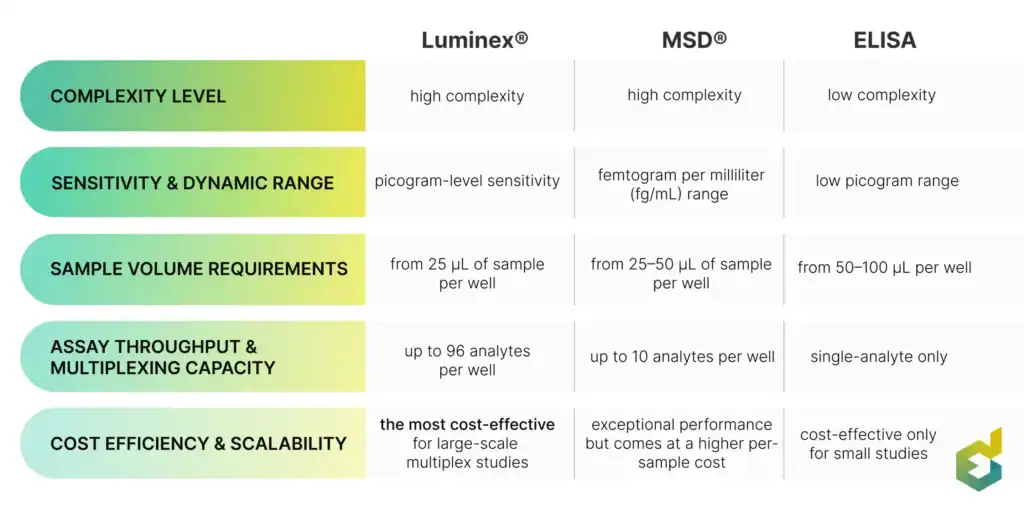
A multiplex biomarker assay measures multiple analytes within the same experimental setup, typically using bead-based platforms (e.g., Luminex®) or microarray and electrochemiluminescence technologies. Each analyte is captured by a distinct antibody coupled to a unique signal, enabling high-dimensional data generation from limited sample volumes.
Unlike singleplex assays, multiplex platforms can quantify dozens to hundreds of biomarkers simultaneously, making them particularly well-suited for immune profiling, discovery research, and systems-level analyses.
To learn more about the strengths and limitations of different multiplex platforms, read our blog post: Multiplex Cytokine Assays Compared: Luminex®, Meso Scale Discovery®, and Traditional ELISA.
1. A Broader Biological Picture: Beyond “One Marker at a Time”
Biological processes such as inflammation, immune activation, and therapeutic response are driven by interdependent signaling networks, not isolated biomarkers. While individual analytes like IL-6 or TNF-α can be informative, relying on a limited panel risks missing regulatory interactions and compensatory pathways.
Multiplex profiling enables a network-level view of immune activity by capturing coordinated changes across many markers simultaneously. This allows researchers to identify immune phenotypes—such as Th1, Th2, or Th17-biased responses—based on pathway-specific patterns rather than individual measurements.
For example, simultaneous assessment of pro-inflammatory and regulatory cytokines can distinguish active inflammation from resolution or immune compensation—insight that is difficult to achieve with small panels alone. This systems-level perspective is especially valuable in immuno-oncology, infectious disease, and immune modulation studies, where pathway interactions are central to biological interpretation.
2. Maximizing Insight From Limited Sample Volumes
Many research samples are inherently scarce, including longitudinal clinical specimens, pediatric blood samples, cerebrospinal fluid, and animal model samples. Traditional singleplex assays often require a full aliquot per analyte, quickly exhausting valuable material.
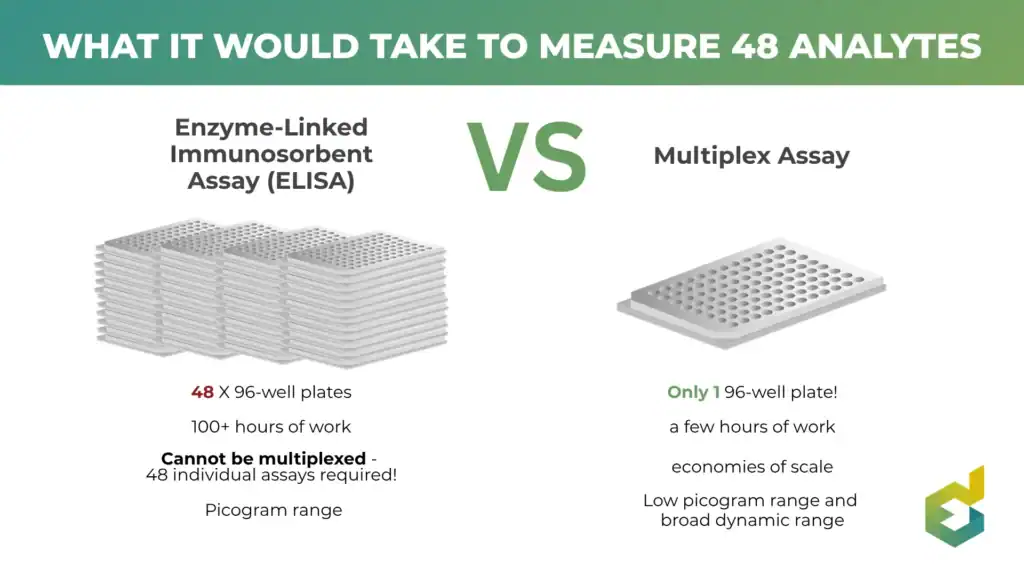
Multiplex assays dramatically reduce sample requirements by enabling measurement of dozens of biomarkers from microliter-scale volumes. Independent validation studies show that multiplex panels can characterize multiple cytokines using less than one-thirtieth of the sample volume required for equivalent ELISA workflows.
In one study, triplicate measurement of nine cytokines by multiplex required approximately 150 µL of sample, compared with ~5.5 mL for the same targets measured by ELISA. This conservation of sample allows researchers to preserve material for validation, reduce freeze–thaw variability, and perform longitudinal analyses without depleting stored specimens.
3. Improved Throughput, Efficiency, and Cost-Effectiveness
Multiplex profiling increases efficiency by enabling simultaneous measurement of many biomarkers in a single run, reducing labor, reagent consumption, and overall cost per data point. What would otherwise require multiple ELISA plates and repeated handling can be consolidated into one experiment.
This efficiency is particularly advantageous for large cohort studies, screening campaigns, and high-throughput immune profiling projects. Importantly, increased throughput does not come at the expense of data quality or sensitivity, making multiplex assays well-suited for time- and budget-constrained research environments.
4. Consistency Across Analytes and Experimental Conditions
Because all analytes are measured within the same reaction environment, multiplex assays provide high experimental consistency. Identical incubation times, reagents, and detection conditions minimize run-to-run variability and improve comparability across analytes.
This consistency enhances data reliability, supports robust statistical comparisons, and is especially important for translational research, multi-site studies, and meta-analyses where technical variability can obscure biological signal.
5. Enhanced Discovery Potential in Exploratory Studies
In exploratory and hypothesis-generating research, the most informative biomarkers are often unknown at the outset. Limiting analysis to a predefined set of targets can bias results and obscure unexpected but biologically meaningful signals.
Comprehensive multiplex profiling increases the likelihood of identifying:
- Novel biomarkers associated with disease or treatment response
- Secondary or compensatory pathways
- Complex immune signatures that limited panels fail to capture
These high-dimensional datasets also support downstream multivariate analyses, including clustering, principal component analysis (PCA), and machine learning, enabling detection of patterns and associations that are not accessible through low-plex measurements.
6. Support for Advanced Multivariate and Machine Learning Analyses
Modern immunology and biomarker research increasingly rely on computational and multivariate approaches to interpret complex datasets. Multiplex data are inherently compatible with unsupervised clustering, latent profile analysis, and machine-learning-based classification.
These approaches allow researchers to distinguish immune states, stratify patients, and identify predictive biomarker patterns using coordinated profiles rather than individual markers. In clinical research, multiplex-based computational models have been used to classify disease states and assess risk based on patterns across multiple analytes—highlighting the analytical power of broad profiling.
7. Evidence From Research Applications
Disease-Relevant Study Examples
Published studies demonstrate the practical value of multiplex profiling:
- A comparison of cytokine panels across patient cohorts (e.g., glioblastoma vs controls) showed that multiplex platforms can quantify numerous cytokines and reveal disease-associated patterns. (2)
- Multiplex panels have been used to characterize rheumatoid arthritis patients, identifying elevated immunomodulators and enabling cluster analysis of profiles. (3)
- Proteomics research using high-plex methods has identified inflammation-related signatures in aging and cardiometabolic disease. (4)
These studies exemplify how broad profiling provides enhanced biological insight and richer datasets compared with limited marker panels.
Case Study: Multiplex Profiling in Long COVID – Featuring Work by Our Clients
As one example, our clients used our comprehensive multiplex assays for high-dimensional immune profiling, as described in an earlier immune profiling study (Lucas et al., Nature, 2020) (5) that explicitly references Eve Technologies’ assay services. In that work, broad cytokine and immune profiling was used to characterize coordinated immune responses across large human cohorts, demonstrating the value of measuring many analytes simultaneously rather than interpreting individual markers in isolation.
Building on this foundation, the same research group later applied multidimensional immune profiling and computational analysis in a landmark immune profiling study (Klein et al., Nature, 2023) (6), integrating measurements across immune cell populations, antibody responses, and soluble mediators to identify immune features associated with persistent post-COVID symptoms. The ability to detect these immune signatures relied on broad, multiplex profiling, underscoring how comprehensive analyte measurement enables insights into complex disease states that limited panels are unlikely to capture.
More recently, the importance of high-plex measurement for complex immune studies was further demonstrated by Engel et al. (PNAS, 2025) (7), where our Human Cytokine 96-Plex Discovery Assay (HD96) was used to quantify 96 biomarkers simultaneously in a CAR-T cell therapy study. This approach generated rich, high-dimensional datasets suitable for multivariate and systems-level analysis, enabling deeper insight into immune dynamics and treatment-associated immune responses that would not be captured with lower-plex assays.
Extending Insight to the Clinic: HD95 Immune Signatures
Beyond research applications, Eve Diagnostics, a clinical division of Eve Technologies, also offers the Cytokine, Chemokine, Growth Factor 95-Plex Panel (HD95-Clin) assay, a CLIA-certified clinical multiplex panel designed to provide deeper insight into immune signatures at the individual level. The value of this approach is supported by our study (Polley et al., Frontiers in Immunology, 2023) (8), which used high-dimensional cytokine profilingto identify reproducible immune clusters and cytokine signatures across large human cohorts. Rather than interpreting cytokines individually, the study demonstrated that patterns of cytokine expression form biologically meaningful groupings that reflect underlying immune states.
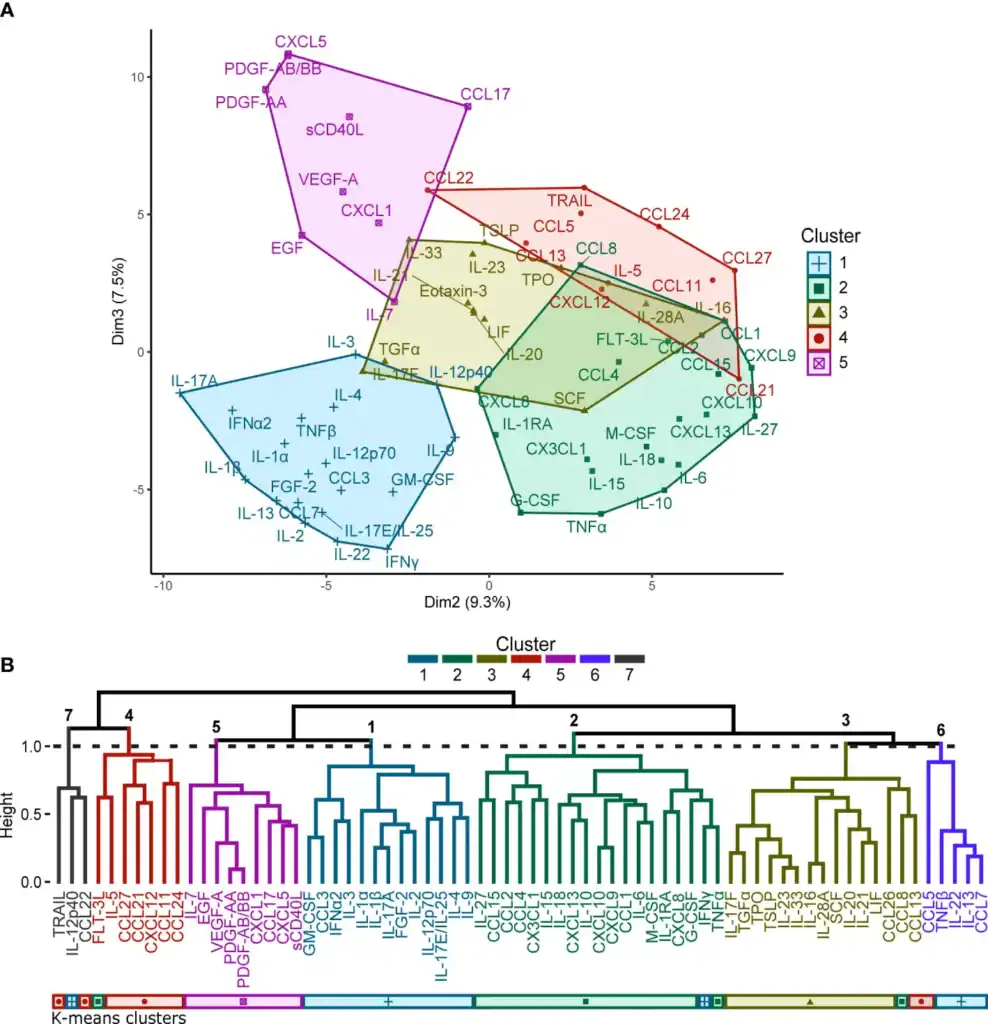
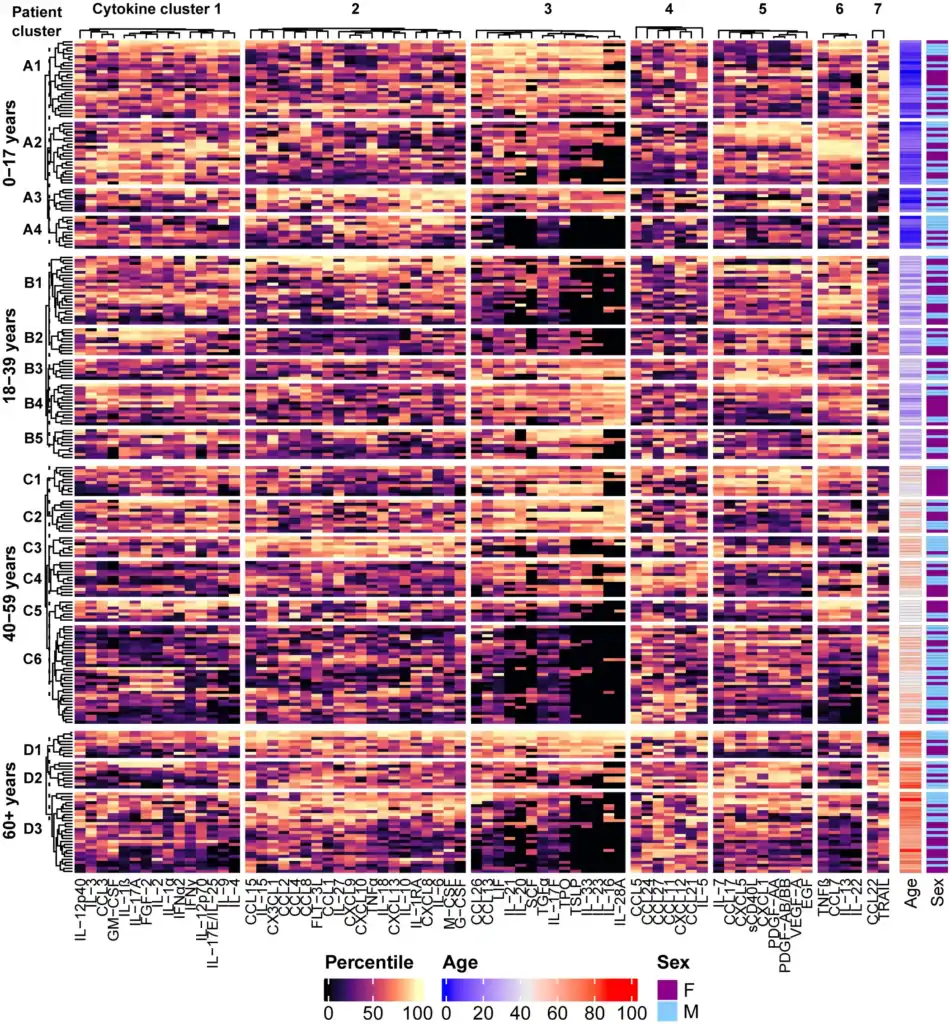
These findings underpin a key feature of the HD95-Clin assay: results are reported with immune signature context, enabling clearer interpretation of complex immune activity. This approach supports both clinical trial immune monitoring and patient-level insight, where understanding coordinated immune behavior is more informative than evaluating single biomarkers in isolation.
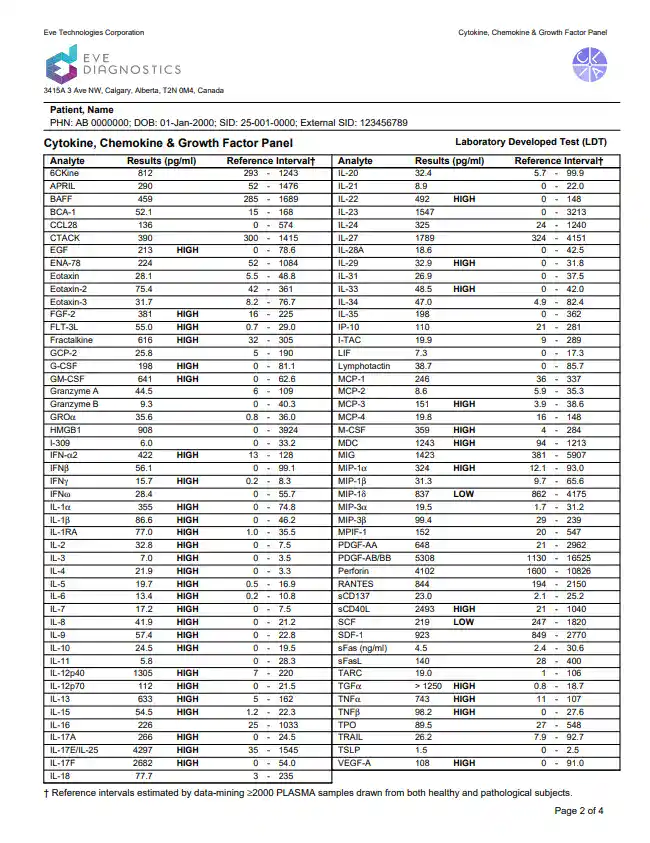
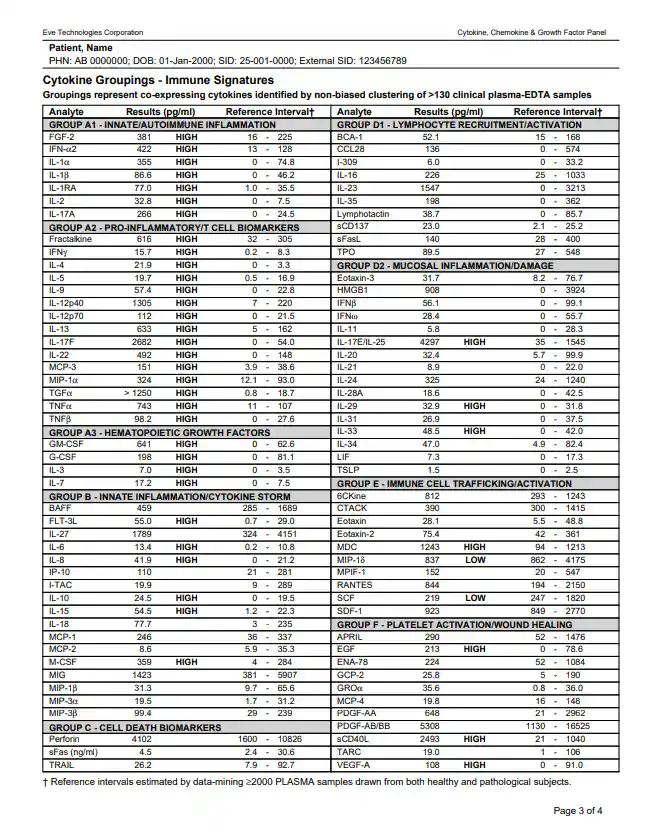
HD95 results are uniquely reported using cytokine grouping into immune signatures, where analytes are organized into functional pathways based on non-biased clustering of large clinical datasets. This approach provides biological context beyond individual cytokine values and reflects coordinated immune activity.
Exploring Multiplex Options for Your Study
For researchers interested in applying multiplex profiling to their own work, Eve Technologies offers a broad portfolio of human and mouse multiplex panels through our Discovery Assays, covering cytokines, chemokines, growth factors, and other immune mediators. These assays are available on a pay-per-well basis, allowing studies to scale efficiently without the need to purchase full plates or meet minimum sample requirements.

Whether a project involves a single exploratory sample or a large cohort of 1,000+ samples, this flexible model makes high-quality multiplex profiling more accessible and cost-effective across studies of all sizes. Researchers can select only the analytes and sample numbers they need, supporting both early-stage discovery and large-scale investigations without unnecessary constraints.
Conclusion: Deeper Insights Through Broader Profiling
Multiplex biomarker profiling reflects the complexity of biological systems and equips researchers with tools to study immune behavior more accurately and efficiently. By capturing coordinated signals across multiple analytes, multiplex approaches enable deeper biological insight, greater discovery potential, and more confident data-driven decisions — advantages that limited-analyte panels cannot readily provide.
References
- Leng, S. X., McElhaney, J. E., Walston, J. D., Xie, D., & Fedarko, N. S. (2008). ELISA and multiplex technologies for cytokine measurement in inflammation and aging research. Journal of Gerontology: Biological Sciences, 63(8), 879–884. https://doi.org/10.1093/gerona/63.8.879
- Khan, I. H., Krishnan, V. V., Ziman, M., Janatpour, K., Wun, T., Luciw, P. A., & Tuscano, J. (2009). A comparison of multiplex suspension array large-panel kits for profiling cytokines and chemokines in rheumatoid arthritis patients. Cytometry Part B: Clinical Cytometry, 76(3), 159–168. https://doi.org/10.1002/cyto.b.20452
- Bender, D. E., Schaettler, M. O., Sheehan, K. C. F., Johanns, T. M., & Dunn, G. P. (2021). Cytokine profiling in plasma from patients with brain tumors versus healthy individuals using two different multiplex immunoassay platforms. Biomarker Insights, 16, 11772719211006666.
https://doi.org/10.1177/11772719211006666 - Wu, S., Li, Y., Zhao, X., Shi, F.-D., & Chen, J. (2024). Multiplex proteomics identifies inflammation-related plasma biomarkers for aging and cardio-metabolic disorders. Clinical Proteomics, 21, 30.
https://doi.org/10.1186/s12014-024-09480-x - Lucas, C., Wong, P., Klein, J., Castro, T. B. R., Silva, J., Sundaram, M., Ellingson, M. K., Mao, T., Oh, J. E., Israelow, B., Takahashi, T., Tokuyama, M., Lu, P., Venkataraman, A., Park, A., Mohanty, S., Wang, H., Wyllie, A. L., Vogels, C. B. F., … Iwasaki, A. (2020). Longitudinal analyses reveal immunological misfiring in severe COVID-19. Nature, 584, 463–469. https://doi.org/10.1038/s41586-020-2588-y
- Klein, J., Wood, J., Jaycox, J. et al. (2023). Distinguishing features of long COVID identified through immune profiling. Nature, 623, 139–146. https://doi.org/10.1038/s41586-023-06651-y
- N.W. Engel, I. Steinfeld, D. Ryan, K. Anupindi, S. Kim, N. Wellhausen, L. Chen, K. Wilkins, D.J. Baker, P.C. Rommel, D. Jarocha, M. Gohil, Q. Zhang, M.C. Milone, J.A. Fraietta, M. Davis, R.M. Young, & C.H. June, Quadruple adenine base–edited allogeneic CAR T cells outperform CRISPR/Cas9 nuclease–engineered T cells, Proc. Natl. Acad. Sci. U.S.A. 122 (20) e2427216122, https://doi.org/10.1073/pnas.2427216122 (2025)
- Polley, N., Unger, B., Eve Technologies et al. (2023). Cytokine clustering reveals reproducible immune signatures across large human cohorts. Frontiers in Immunology, 14, 1223817. https://doi.org/10.3389/fimmu.2023.1223817